For years, hotel marketing teams have debated where to invest their budgets.
Should we spend more on paid search?
Should we create more social content?
Should we invest in influencers?
Should we increase our advertising budget?
The question itself is flawed.
The highest-performing hotel brands aren’t choosing between organic and paid marketing.
They’re using both together to create a demand engine that continually feeds itself.
Organic builds awareness.
Paid accelerates reach.
Together, they create a revenue multiplier that neither channel can achieve alone.
Why This Debate Exists
Marketing budgets are finite.
When occupancy softens or budgets tighten, the pressure to produce immediate results increases.
Paid media often wins those conversations because it’s measurable.
Launch a campaign today.
See clicks tomorrow.
Track bookings next week.
Organic marketing doesn’t usually deliver that kind of instant feedback.
Building an engaged audience takes time.
Growing trust takes consistency.
Creating a recognizable brand happens over months, not days.
Because the payoff is longer term, organic investment is often the first thing to be reduced.
Ironically, that’s exactly what weakens paid performance over time.
Organic Builds the Audience
Imagine opening a luxury hotel in a competitive destination.
Before someone books, they need to know you exist.
That’s where organic marketing creates value.
Every piece of content expands your audience.
Every destination guide attracts new travelers.
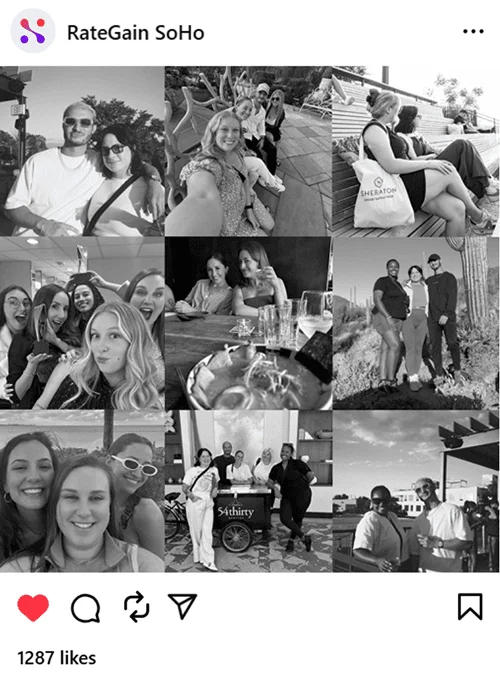
Every Instagram Reel introduces someone to your property.
Every guest photo builds credibility.
Every creator partnership expands awareness.
Over time, those moments create an audience that knows, recognizes, and trusts your brand.
That audience becomes the foundation for every future marketing effort.
Paid Scales What Already Works
Paid media isn’t just about reaching more people.
It’s about reaching the right people at the right time.
The strongest paid campaigns rarely start with brand-new creative.
They start with content that’s already proven successful organically.
When a video generates exceptional engagement on its own, paid media can amplify it to a much larger audience.
When a guest story resonates with travelers, advertising extends its reach.
When destination content performs well, paid promotion accelerates its impact.
Paid doesn’t replace organic creativity.
It magnifies it.
Great Marketing Creates Momentum
Think about how travelers actually interact with a hotel brand.
They discover a Reel showcasing a rooftop sunset.
A week later, they see a creator’s room tour.
They begin following the hotel.
They receive a retargeting advertisement.
They visit the website.
They leave without booking.
A month later, another video reminds them about the property.
Finally, they book a weekend stay.
No single interaction drove the reservation.
Each interaction reinforced the last.
Momentum—not one campaign—created the booking.
Every Organic Interaction Makes Paid Smarter
Organic marketing creates valuable behavioral signals that improve advertising performance.
Travelers who:
- Watch your videos,
- Visit your profile,
- Save your content,
- Engage with your posts,
- Visit your website,
- Subscribe to your newsletter,
become highly qualified audiences for future advertising.
Instead of targeting complete strangers, paid campaigns can focus on people who have already demonstrated interest.
That improves:
- Click-through rates.
- Conversion rates.
- Audience quality.
- Advertising efficiency.
- Return on investment.
Organic continually feeds paid with better audiences.
Paid Creates New Organic Opportunities
The relationship works in both directions.
Paid campaigns introduce new travelers to your brand.
Some of those travelers begin following your social channels.
They engage with future content.
Share posts with friends.
Create guest-generated content after visiting.
Leave reviews.
Recommend your property.
Today’s paid audience becomes tomorrow’s organic community.
That’s how healthy demand engines grow.
The Strongest Brands Don’t Think in Channels
Travelers don’t separate your marketing into departments.
They don’t think:
“I discovered this hotel through organic social.”
“Now I’m responding to paid advertising.”
They simply experience your brand.
Every interaction contributes to the same perception.
That means every marketing investment should strengthen the next.
Organic content builds recognition.
Paid advertising reinforces recognition.
Community management deepens trust.
Guest experiences generate authentic stories.
Those stories fuel new discovery.
Each channel supports every other channel.
The Revenue Multiplier Effect
When organic and paid work together, several things happen simultaneously:
- More travelers discover your brand.
- Brand recognition increases.
- Paid campaigns become more efficient.
- Website traffic grows.
- Direct bookings increase.
- Customer acquisition costs stabilize.
- Guest advocacy expands.
- Future audiences become larger.
Rather than adding results together, the channels amplify one another.
One plus one becomes three.
That’s the multiplier effect.
Stop Allocating Budgets. Start Building Systems.
Many hotels still ask:
“How much should we spend on organic?”
“How much should we spend on paid?”
A better question is:
“How do these investments support one another?”
The answer isn’t a fixed percentage.
It’s an integrated strategy where every channel contributes to the same business outcome.
Discovery creates awareness.
Engagement builds trust.
Paid accelerates visibility.
Community management strengthens relationships.
Guest experiences generate stories.
Advocacy fuels new discovery.
Together, they create a self-reinforcing system that becomes stronger with every guest interaction.
The Future Belongs to Integrated Marketing
Hospitality marketing is no longer about choosing the best channel.
It’s about orchestrating every channel to move travelers through the entire demand journey.
Organic without paid often limits reach.
Paid without organic often struggles to build lasting trust.
Together, they create something far more powerful:
A marketing engine that continuously creates awareness, builds credibility, improves advertising performance, lowers acquisition costs, and generates sustainable revenue growth.
That’s the revenue multiplier most hotels overlook.
And it’s one of the biggest opportunities in hospitality marketing today.